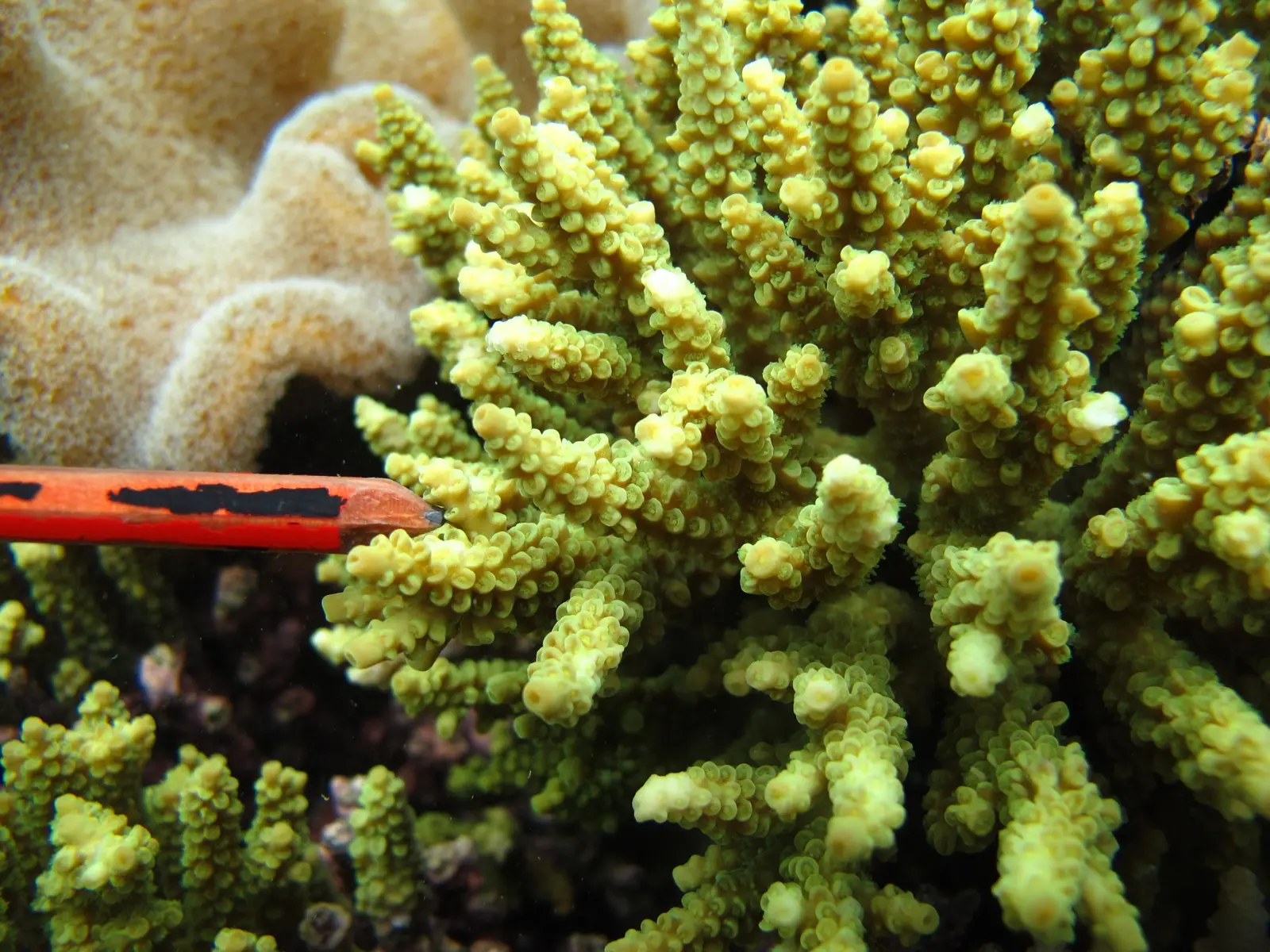
Acropora Tenuis Coral (Acropora tenuis) is a branching Indo-Pacific reef coral represented here by a source-identified corallite record from Torres Strait.
See Acropora Tenuis Coral clearly
Select any thumbnail to open the unobstructed full-size image in a separate window.

Responsible care profile
This commonly traded Acropora still requires verified identity, documented origin, pest quarantine, and gradual photoacclimation.
The structured record includes multiple references and at least one dedicated aquarium-care source.
4 referenced sources- Experience
- advanced SPS specialist
- Minimum volume
- 285 L / 75 US gal
- Preferred volume
- 475 L / 125 US gal
- Adult size
- Not specified
- Reef safety
- conditional
- Social plan
- single documented colony with growth space
- Minimum footprint
- 120 × 50 cm / 47.2 × 19.7 in mature SPS reef
Water
- Temperature
- 24–27 °C / 75.2–80.6 °F
- Specific gravity
- 1.024–1.026
- pH
- 8.1–8.4
- Calcium
- 400–450 ppm
- Alkalinity
- 7.5–9 dKH
- Magnesium
- 1250–1400 ppm
Habitat
stable permanent mount; high measured reef lighting; wide branching growth envelope.
Not applicable; keep every branch in oxygenated moving water.
Light: High, stable reef lighting after gradual acclimation.
Flow: Strong random turbulent flow without a constant tissue-stripping jet.
Feeding
photosymbiotic planktivore. Stable light and dissolved nutrients are foundational; occasional fine marine plankton may supplement growth.
Prioritize stable alkalinity, temperature and salinity over chasing rapid growth.
Compatibility
Allow for branch extension, shading and contact aggression.
Avoid or assess carefully: corallivorous fish, stinging neighbouring corals, unstable new aquariums.
Acclimation and quarantine
Require lawful provenance, quarantine and inspect for flatworms, red bugs and tissue loss; acclimate light gradually.
Stocking safeguards
Suitability: advanced-only. Starvation risk: moderate.
After chemistry, flow and lighting remain stable for an extended period.
- No immature or chemically unstable aquarium
- No undocumented CITES origin
- No placement without pest quarantine
Special risks
- Rapid tissue necrosis
- Acropora-eating flatworms
- Red bugs
- Light shock
- Regulated trade
Habitat and Distribution
A branching Indo-Pacific reef coral represented here by a source-identified corallite record from Torres Strait. Its documented range includes Indo-Pacific, Australia, Torres Strait.
Feeding and Ecological Role
Receives most energy from photosynthetic symbionts and also captures plankton and suspended material.
Conservation and Responsible Sourcing
Consult current conservation and CITES sources and verify collection origin. Verify legal origin, collection method, and current trade requirements before acquisition.
Distribution & Habitat
Its recorded distribution includes the broad tropical Indo-Pacific. Its habitat includes upper reef slopes and shallow subtidal reef flats, commonly around 3 to 20 m.
Natural History
It forms branching colonies with an encrusting base and is a member of a morphologically variable species complex in which field identification can require care.
Conservation Context
Endangered (IUCN A3ce; SeaLifeBase 2025-2 context, assessed 27 April 2023). International trade is monitored under CITES Appendix II.
A living record
Taxonomy is checked against WoRMS and species context against Corals of the World; trade language points to the current CITES Appendices. Generic Acropora photographs remain genus-bound and are not assigned to species from appearance alone. Public content last reviewed September 14, 2026.
- World Register of Marine Species — Acropora tenuis ↗Taxonomic authority
- Corals of the World — Acropora tenuis ↗Scientific reference
- CITES Appendices ↗International treaty authority
- SeaLifeBase ↗Reference source