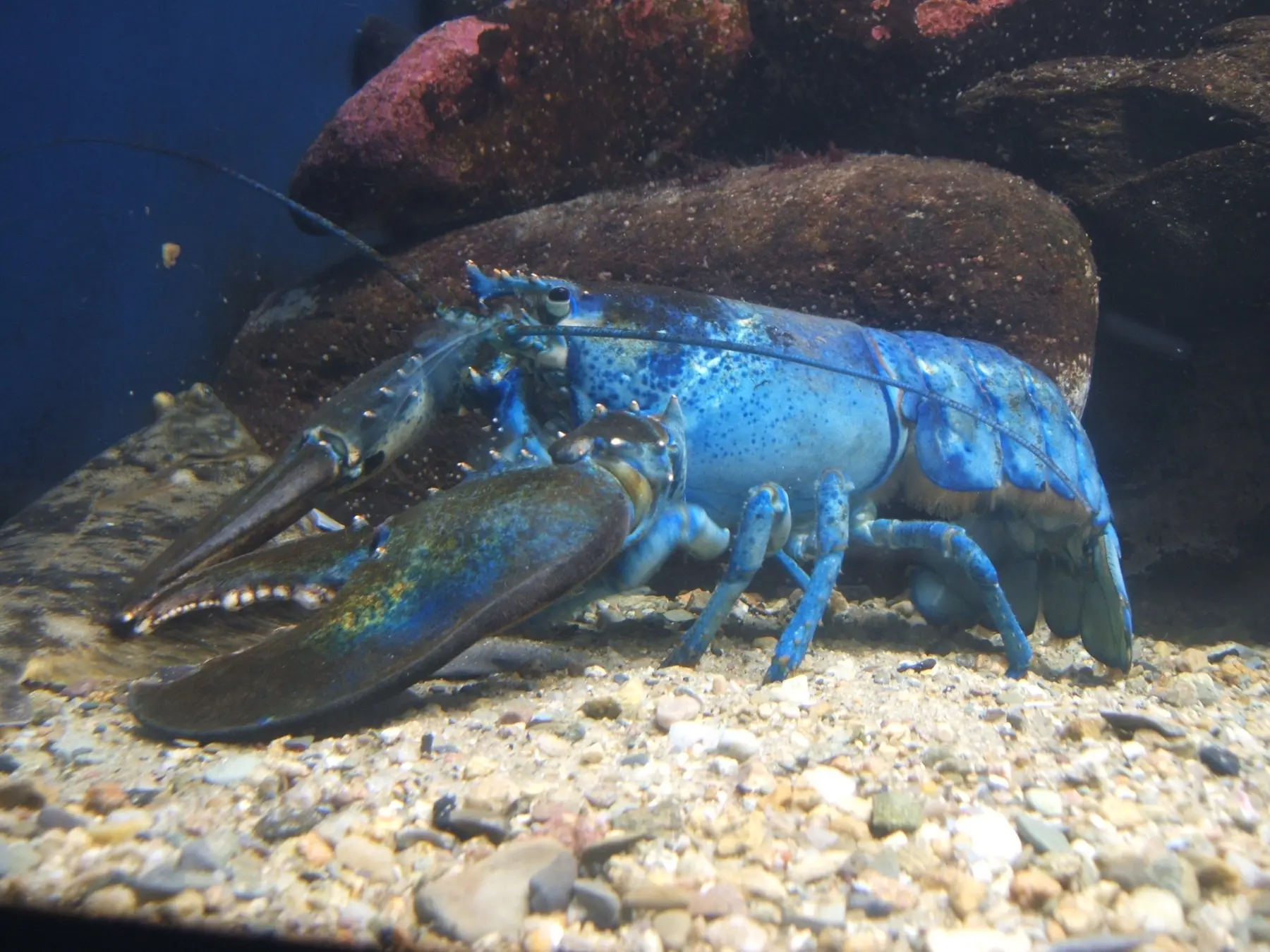
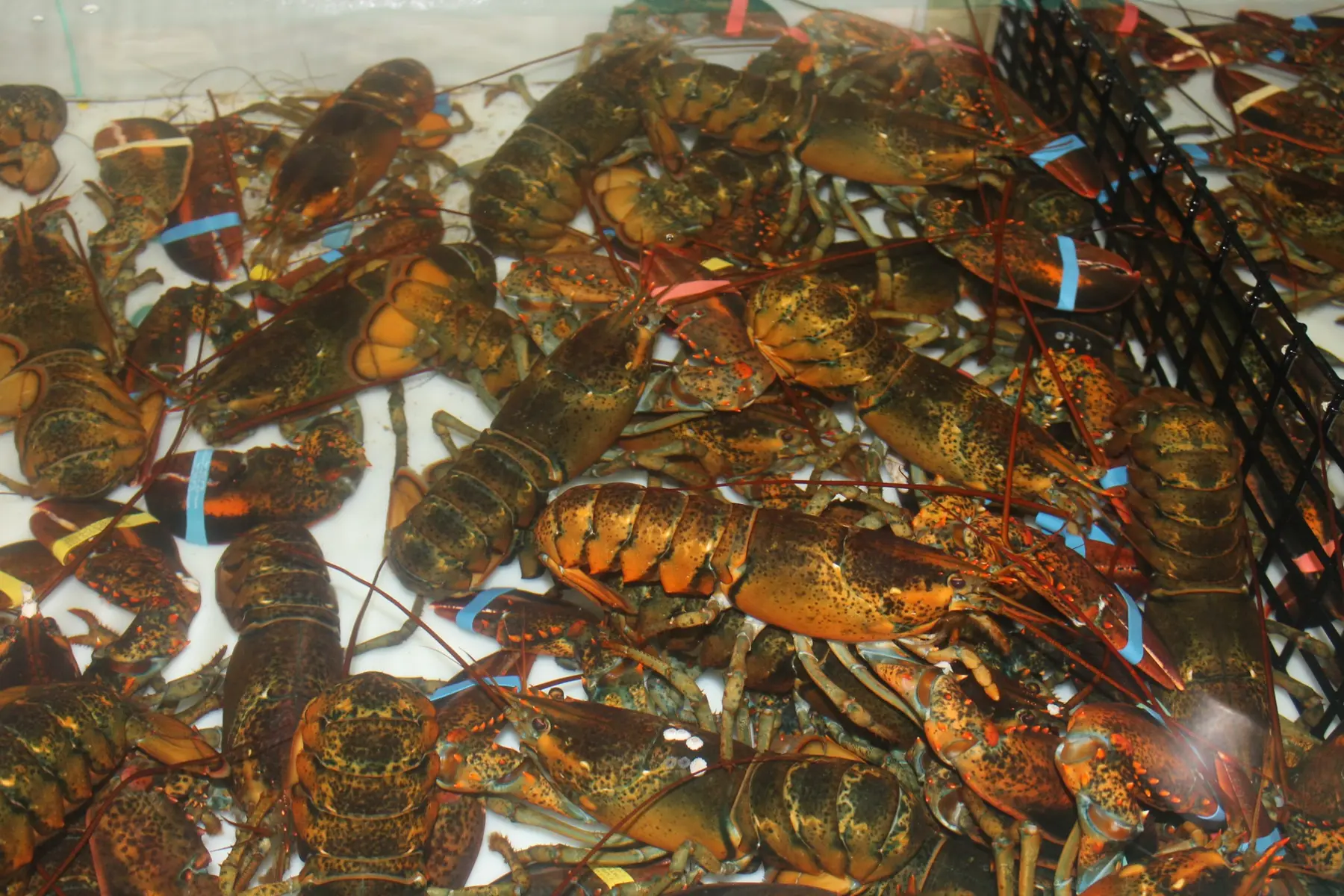
American Lobster (Homarus americanus) is a large clawed lobster of the northwest Atlantic continental shelf, living on rocky, gravel, and mixed seabeds that provide shelter.
See American Lobster clearly
Select any thumbnail to open the unobstructed full-size image in a separate window.
Responsible care profile
A large cold-water, territorial, regulated decapod requiring chilled institutional housing, heavy biological filtration, lawful provenance, and protected moulting refuge.
Multiple references support this institutional or conservation-only care boundary.
2 referenced sources- Experience
- public-aquarium crustacean specialist
- Minimum volume
- Not specified
- Preferred volume
- Not specified
- Adult size
- 64 cm / 25.2 in
- Reef safety
- no
- Social plan
- single specimen unless a verified species-specific plan supports grouping
- Minimum footprint
- Purpose-built public-aquarium benthic exhibit sized from verified adult length
Water
- Temperature
- 4–18 °C / 39.2–64.4 °F
- Specific gravity
- 1.023–1.026
- pH
- 8–8.4
Habitat
mature source-matched system; stable non-collapsing shelter; copper-free water and protected intakes.
A secure retreat large enough for the animal to turn and moult without exposure.
Light: Normal day-night cycle with a shaded retreat.
Flow: Oxygenated indirect flow that does not collapse the burrow or expose the animal during moulting.
Secure lid required.
Feeding
predator and scavenger of marine molluscs, crustaceans, and other benthic prey. Offer measured species-appropriate marine foods and verify consumption several times weekly.
Do not rely on leftovers. Monitor body condition, moulting success, and uneaten food; never use freshwater feeder animals.
Compatibility
Plan around adult reach, predation, burrowing, and vulnerability during moulting.
Avoid or assess carefully: copper medication, small crustaceans and molluscs, predatory fishes, unprotected pumps and heaters.
Acclimation and quarantine
Match salinity and temperature carefully, exclude copper-contaminated water, release beside the prepared refuge, and do not disturb a moulting animal.
Stocking safeguards
Suitability: institutional-only. Starvation risk: moderate.
Only after identity, legal origin, adult size, shelter, diet, and lifetime housing are documented.
- No ordinary home aquarium
- No copper exposure
- No mixed housing without a predation and moulting-risk assessment
Special risks
- Copper sensitivity
- Moulting vulnerability
- Escape
- Predation or territorial injury
Habitat and Distribution
A large clawed lobster of the northwest Atlantic continental shelf, living on rocky, gravel, and mixed seabeds that provide shelter. Its documented range includes Northwest Atlantic, Atlantic Canada, Northeastern United States.
Feeding and Ecological Role
It is an opportunistic benthic predator and scavenger that consumes molluscs, crustaceans, worms, echinoderms, and carrion.
Conservation and Responsible Sourcing
Support science-based fishery management, protection of nursery habitat, lawful harvest, and traceable sourcing. Verify legal origin, collection method, and current trade requirements before acquisition.
Worldwide Distribution
Reviewed occurrence records place this record in Atlantic waters.
Habitat and Movement
Ecologically, culturally, and economically important throughout Atlantic Canada.
Biology and Life History
A benthic crustacean and ecosystem engineer of Northwest Atlantic coastal and shelf habitats.
Threats and Conservation
Conservation context is reviewed against current authoritative assessments and regional management information.
Ecological Connections
BCDE links this record to predators, prey, habitats, and seasonal movements through governed relationship records.
American Lobster in Canada
Ecologically, culturally, and economically important throughout Atlantic Canada.
- Canadian regions
- Atlantic Canada
- Canadian status
- Consult current Canadian assessment
Protected areas associated with American Lobster
These MPA profiles identify this species as significant life. Association does not mean its entire range is protected.
A living record
Source-governed foundation profile. Taxonomy and marine status are checked against WoRMS and ecological context against SeaLifeBase. Image identity follows each Wikimedia Commons source record; records without species-level evidence remain collective rather than being identified from appearance. Public content last reviewed September 19, 2026.
- World Register of Marine Species — Homarus americanus ↗Taxonomic authority
- SeaLifeBase — Homarus americanus ↗Scientific biodiversity database
- IUCN Red List of Threatened Species ↗Conservation authority
- Fisheries and Oceans Canada — Aquatic species ↗Government source