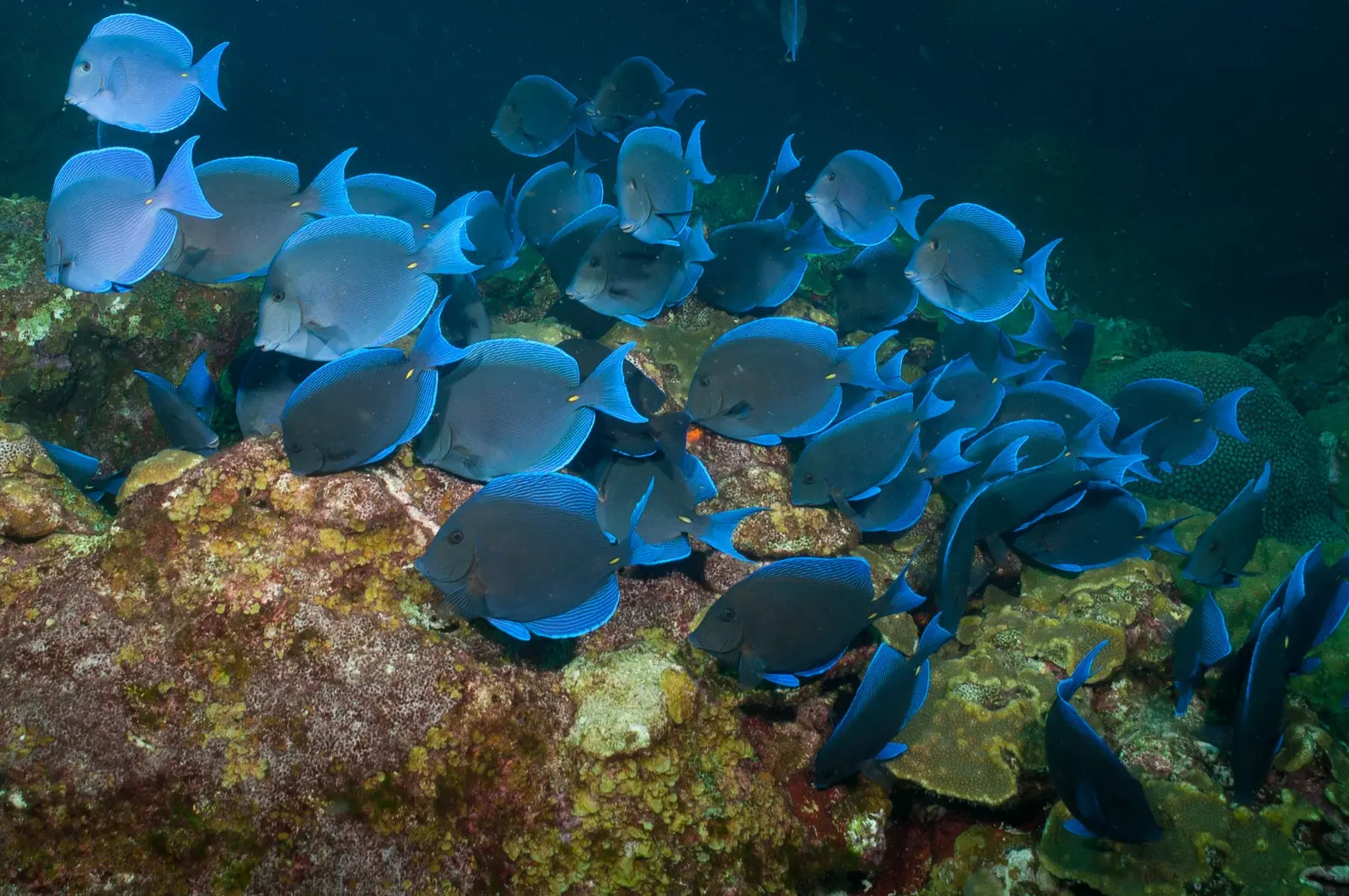
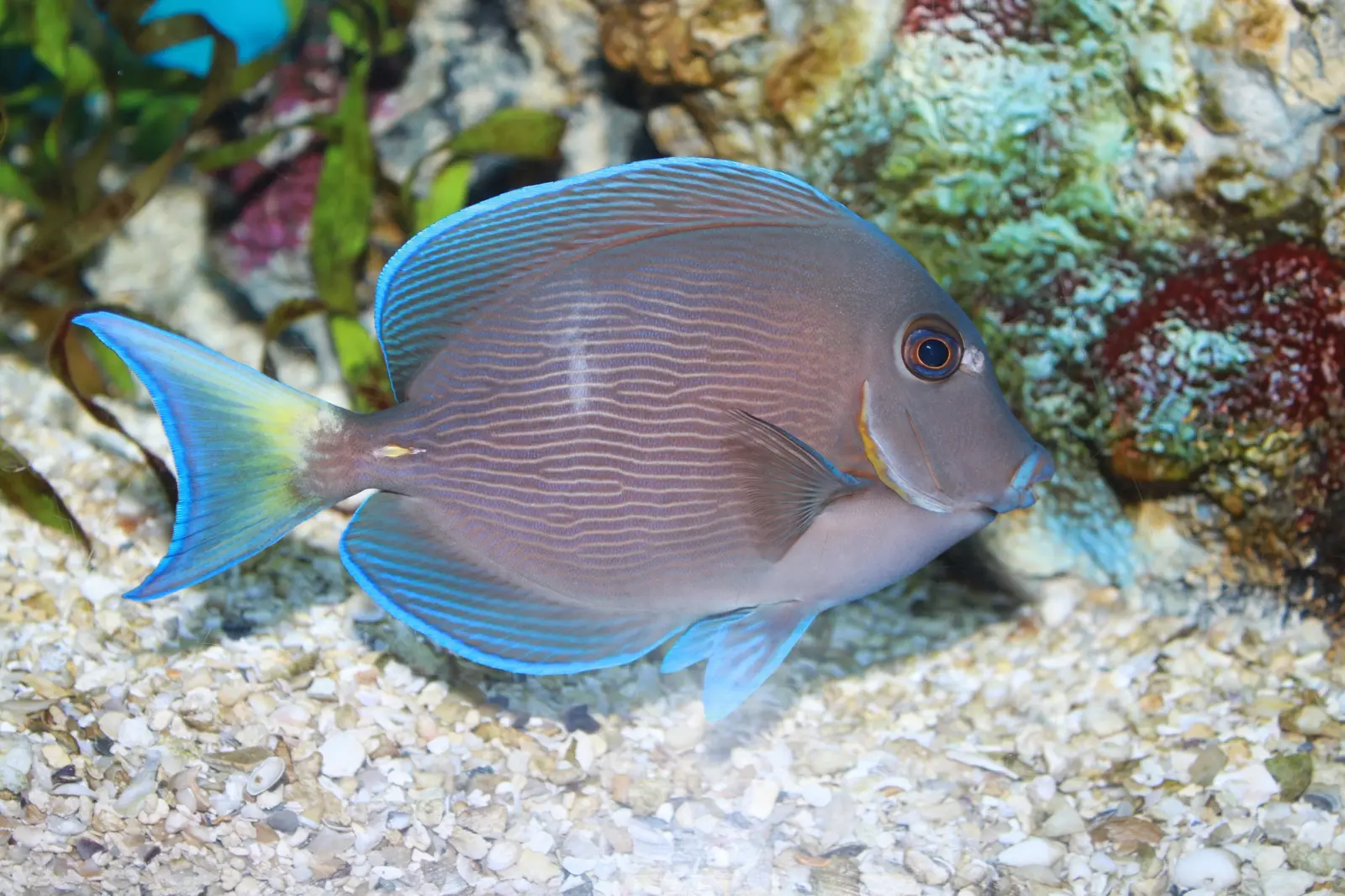
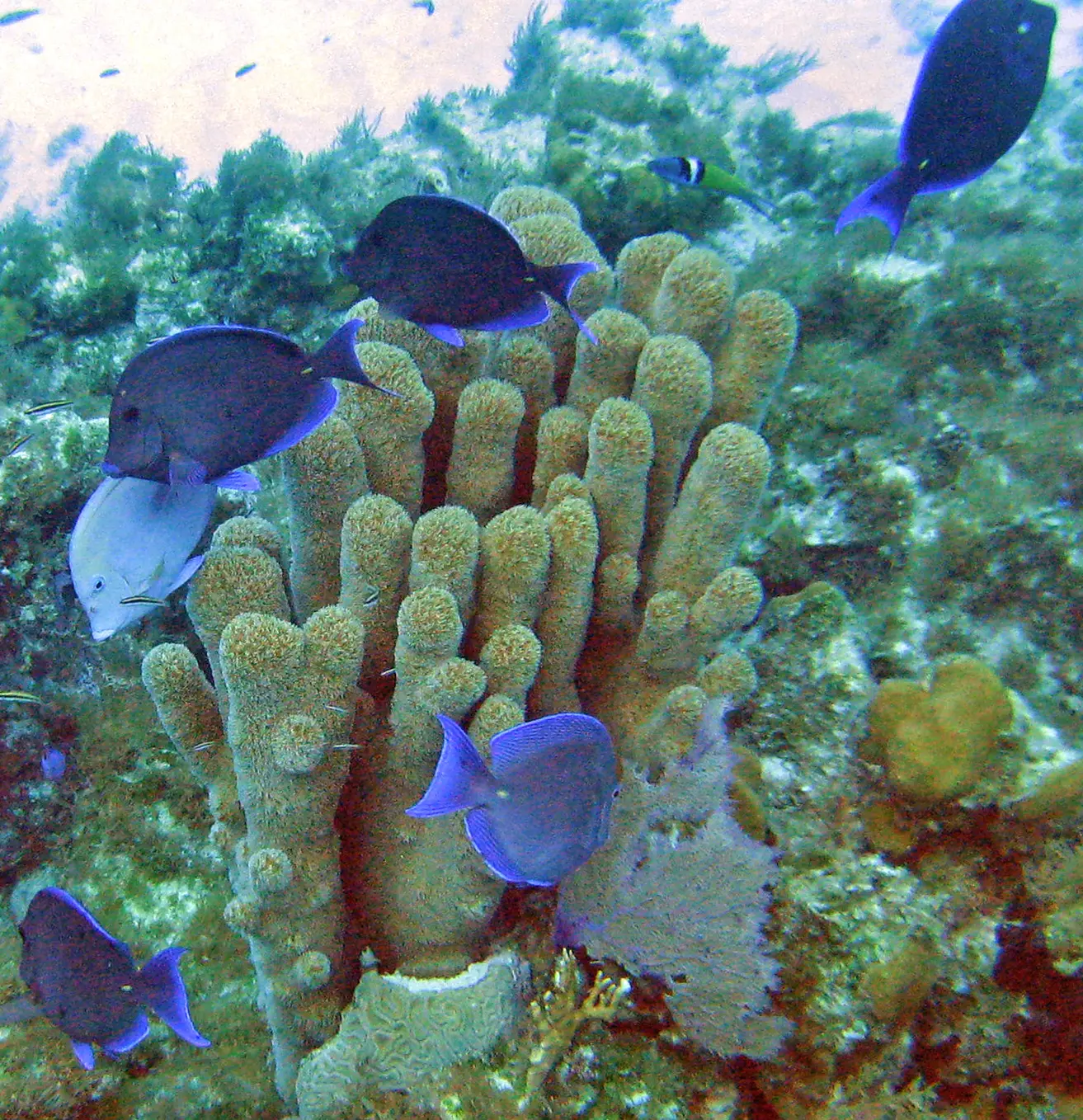
Atlantic Blue Tang (Acanthurus coeruleus) occurs on coral and rocky reefs, where juveniles and adults may use different depths and microhabitats.
See Atlantic Blue Tang clearly
Select any thumbnail to open the unobstructed full-size image in a separate window.



Responsible care profile
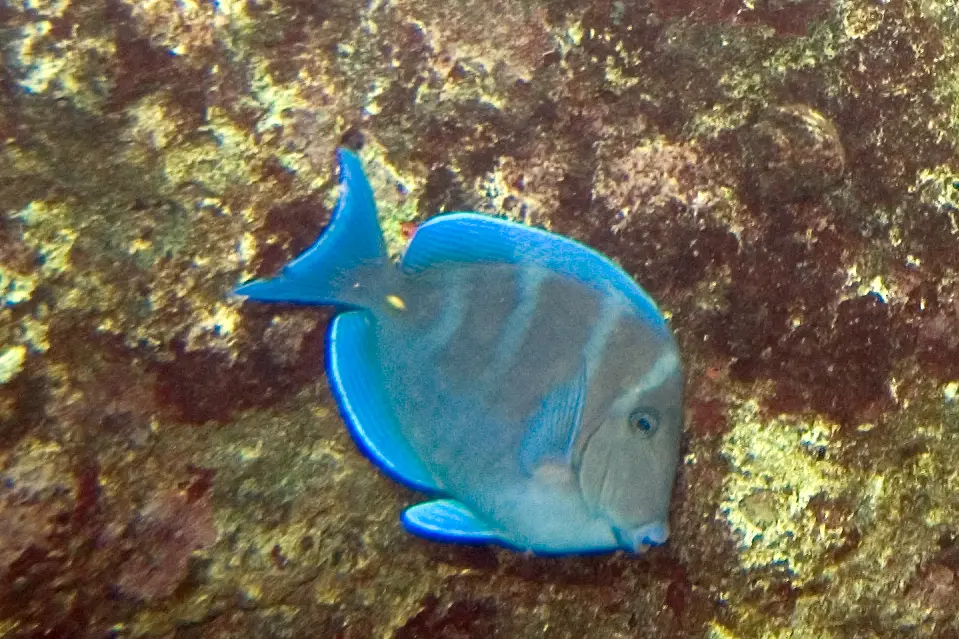
Plan around the active adult, not the small yellow juvenile commonly offered in trade.
The structured record includes multiple references and at least one dedicated aquarium-care source.
3 referenced sources- Care level
- Advanced
- Minimum volume
- 125.5 US gal (475 L)
- Preferred volume
- 179.6 US gal (680 L)
- Adult size
- 15.4 in (39 cm)
- Reef compatibility
- Reef-Safe with Caution
- Temperament
- Active and territorial
- Social plan
- single specimen
- Minimum footprint
- 180 × 60 cm / 70.9 × 23.6 in
Water
- Temperature
- 75.2–82.4 °F (24–28 °C)
- Salinity / specific gravity
- 1.023–1.026 SG
- pH
- 8.1–8.4
Habitat
long open swimming lane; mature algae-bearing rock; high gas exchange.
Several adult-sized rock retreats without narrowing the swim lane.
Flow: Strong broad circulation.
Secure lid required.
Feeding
herbivorous grazer · Provide marine algae through the day with several small supplementary feeds. · Food options: marine algae sheets, spirulina-rich pellets, mysis, marine plankton · Vegetable matter and natural grazing must dominate the diet.
Compatibility
Keep one unless the system is exceptionally large and deliberately planned for a group.
Avoid or assess carefully: similar surgeonfish, timid feeding competitors.
What the evidence establishes
Field-level source review. Aquarium recommendations remain husbandry guidance, not experimentally validated limits.
Acclimation and quarantine
Use a covered acclimation enclosure and introduce after peaceful fish but before more aggressive surgeonfish.
Stocking safeguards
Aquarium setting: Home aquarium. Starvation risk: moderate.
After peaceful fish; before more aggressive surgeonfish.
- No short or newly cycled aquarium
- No algae-poor diet
- No uncovered system
Special risks
- Sharp caudal scalpels
- Territorial aggression
- High oxygen demand
- Marine ich susceptibility
Husbandry Findings and Limits
These findings explain what the cited evidence supports. Facility precautions are identified separately from tested captive outcomes.
Documented aquarium husbandry — Documented keeping guidance; not a controlled trial
Feeding: herbivorous grazer. Provide marine algae through the day with several small supplementary feeds. Food options: marine algae sheets, spirulina-rich pellets, mysis, marine plankton. Several adult-sized rock retreats without narrowing the swim lane. Water movement: Strong broad circulation. Keep one unless the system is exceptionally large and deliberately planned for a group. Use a covered acclimation enclosure and introduce after peaceful fish but before more aggressive surgeonfish.
Scope and remaining limit: Species-matched author guidance is available; it is not a controlled lifetime trial.
Sources: LiveAquaria — Atlantic Blue Tang swimming and feeding careHabitat and Distribution
Occurs on coral and rocky reefs, where juveniles and adults may use different depths and microhabitats. Its documented range includes Western Atlantic, Caribbean, Gulf of Mexico.
Feeding and Ecological Role
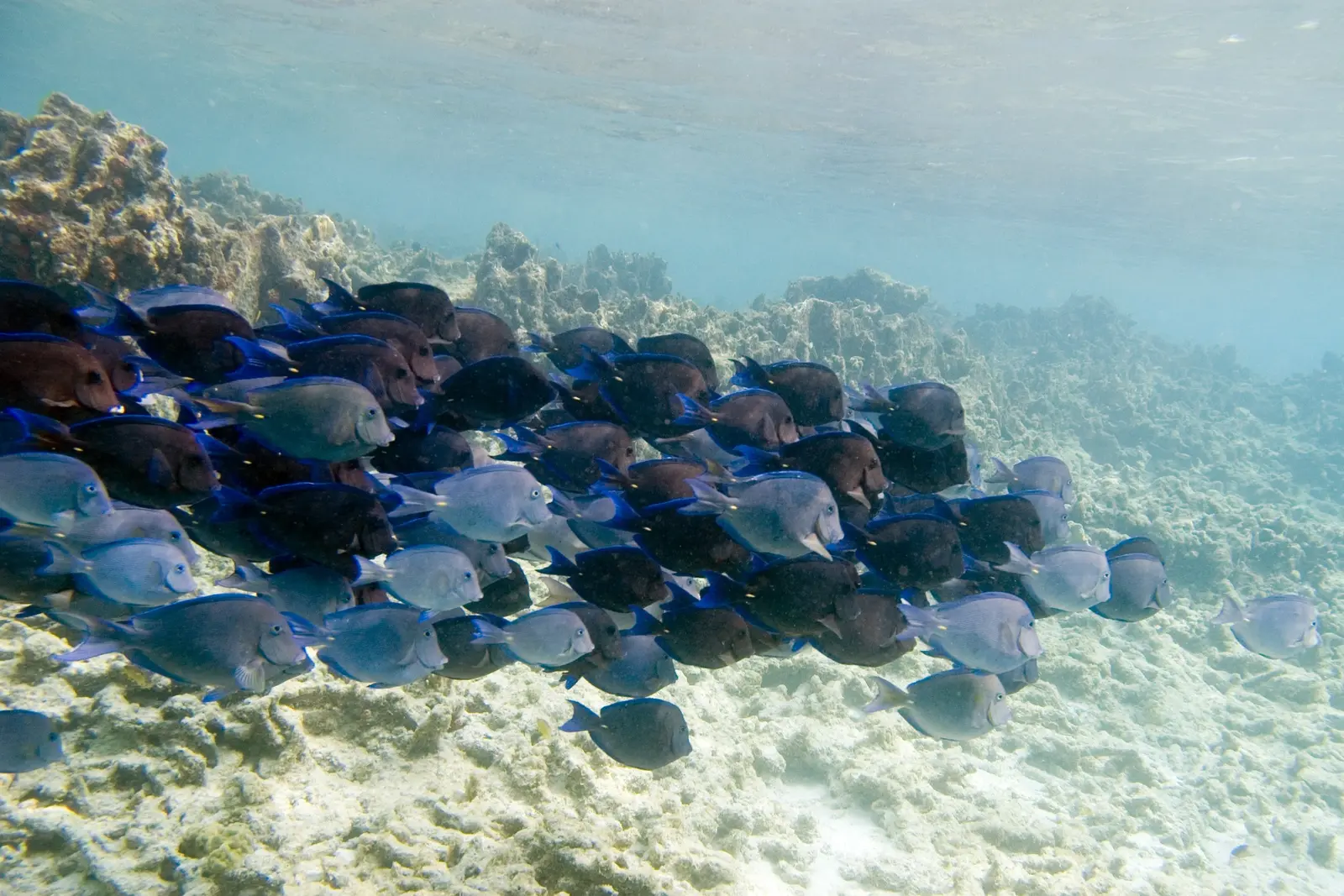
Grazes benthic algae and can form feeding groups that influence algal cover on reefs.
Conservation and Responsible Sourcing
Global conservation status requires current source verification; reef condition and collection pressure should be reviewed regionally. Verify legal origin, collection method, and current trade requirements before acquisition.
Distribution & Habitat
Western Atlantic from the northeastern United States and Bermuda through the Gulf of Mexico and Caribbean to Brazil; also recorded at Ascension Island. Occurs on coral reefs and inshore grassy or rocky areas.
Wild Natural History
It is a diurnal algal grazer that may form small groups.
Identity
This record describes Acanthurus coeruleus Bloch & Schneider, 1801 (WoRMS AphiaID 159581).
Aquarium Care
These statements describe the species in the wild. Aquarium-care guidance awaits separate evidence review.
A living record
MLL foundation profile reviewed against FishBase or the World Register of Marine Species; conservation language remains deliberately qualified where a current assessment has not been attached. Public content last reviewed September 14, 2026.
- FishBase — Acanthurus coeruleus ↗Scientific reference
- World Register of Marine Species ↗Taxonomic authority
- WoRMS exact taxon record ↗Reference source