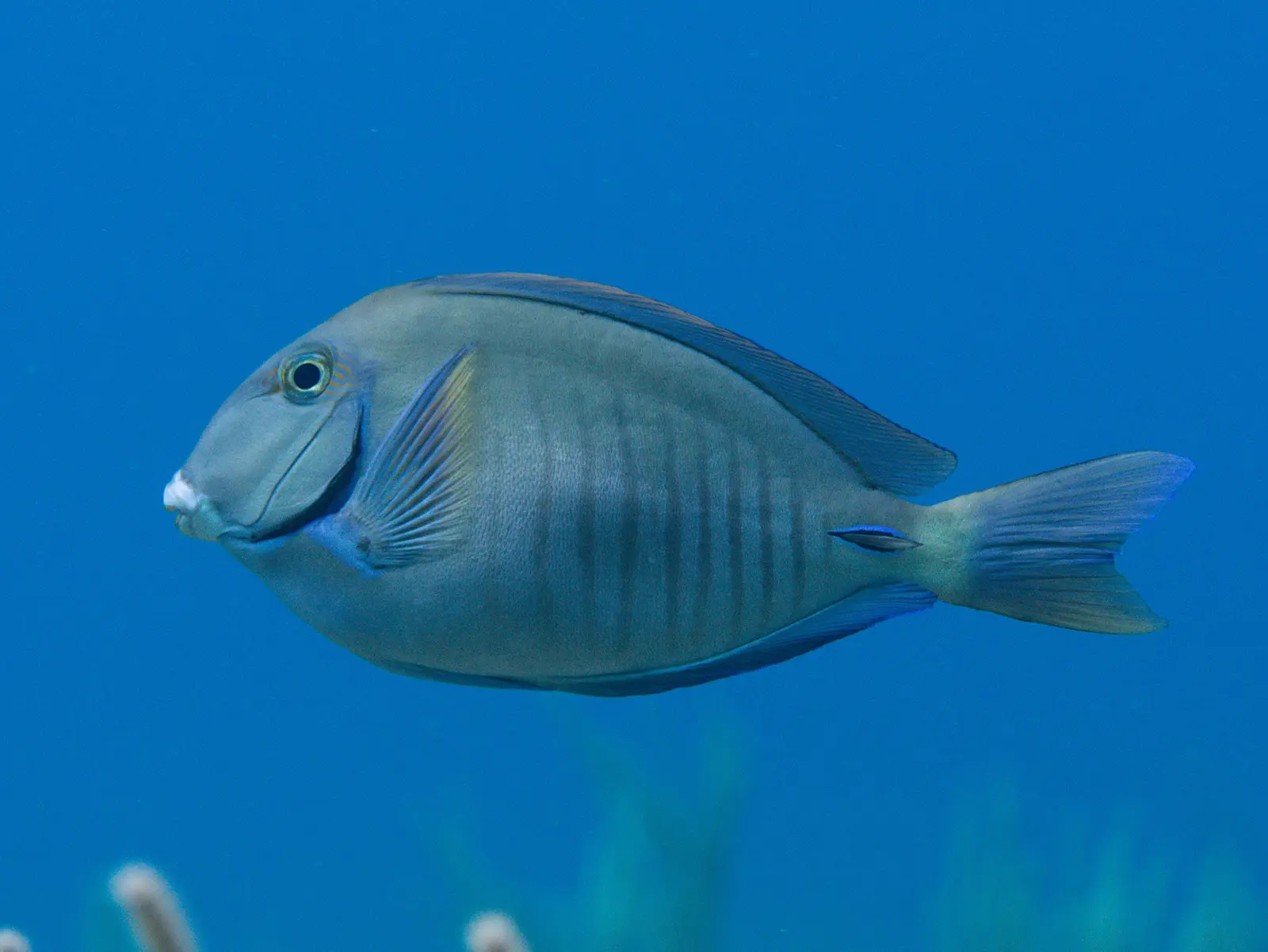
Doctorfish (Acanthurus chirurgus) is found on coral reefs, rocky areas, and seagrass-associated habitats, often alongside other Atlantic surgeonfishes.
See Doctorfish clearly
Select any thumbnail to open the unobstructed full-size image in a separate window.


Responsible care profile
Its routine availability should not obscure the adult swimming footprint.
The structured record includes multiple references and at least one dedicated aquarium-care source.
3 referenced sources- Care level
- Advanced
- Minimum volume
- 125.5 US gal (475 L)
- Preferred volume
- 179.6 US gal (680 L)
- Adult size
- 15.4 in (39 cm)
- Reef compatibility
- Reef-Safe with Caution
- Temperament
- Active and territorial
- Social plan
- single specimen
- Minimum footprint
- 180 × 60 cm / 70.9 × 23.6 in
Water
- Temperature
- 75.2–82.4 °F (24–28 °C)
- Salinity / specific gravity
- 1.023–1.026 SG
- pH
- 8.1–8.4
Habitat
long swim lane; mature grazing rock; strong oxygenation.
Several broad retreats.
Flow: Strong broad circulation.
Secure lid required.
Feeding
herbivorous detritivore · Algae available through the day plus several small varied feeds. · Food options: marine algae sheets, spirulina pellets, mysis, marine plankton · Make algae and vegetable foods the dietary foundation.
Compatibility
Keep one with dissimilar robust companions.
Avoid or assess carefully: other Acanthurus, timid grazers.
What the evidence establishes
Field-level source review. Aquarium recommendations remain husbandry guidance, not experimentally validated limits.
Acclimation and quarantine
Use a covered acclimation enclosure and verify feeding before release.
Stocking safeguards
Aquarium setting: Home aquarium. Starvation risk: moderate.
After peaceful fish; before more aggressive surgeonfish.
- No short aquarium
- No algae-poor diet
- No crowded surgeonfish mix
Special risks
- Sharp caudal scalpels
- Territoriality
- Marine ich susceptibility
- High oxygen demand
Husbandry Findings and Limits
These findings explain what the cited evidence supports. Facility precautions are identified separately from tested captive outcomes.
Documented aquarium husbandry — Documented keeping guidance; not a controlled trial
Feeding: herbivorous detritivore. Algae available through the day plus several small varied feeds. Food options: marine algae sheets, spirulina pellets, mysis, marine plankton. Several broad retreats. Water movement: Strong broad circulation. Keep one with dissimilar robust companions. Use a covered acclimation enclosure and verify feeding before release.
Scope and remaining limit: Species-matched author guidance is available; it is not a controlled lifetime trial.
Sources: Reefs.com — Surgeonfish space, diet and compatibility careHabitat and Distribution
Found on coral reefs, rocky areas, and seagrass-associated habitats, often alongside other Atlantic surgeonfishes. Its documented range includes Western Atlantic, Caribbean, Gulf of Mexico.
Feeding and Ecological Role
Grazes algae and detrital material from reef surfaces.
Conservation and Responsible Sourcing
Global conservation status requires current source verification; coastal habitat quality is an important regional consideration. Verify legal origin, collection method, and current trade requirements before acquisition.
Distribution & Habitat
Western Atlantic from Massachusetts, Bermuda and the northern Gulf of Mexico to Brazil; also Senegal and Ascension Island. Inhabits shallow reefs and rocky areas.
Wild Natural History
Occurs in loose aggregations and grazes algae, ingesting sand while feeding.
Identity
This record describes Acanthurus chirurgus (Bloch, 1787) (WoRMS AphiaID 159580).
Aquarium Care
These statements describe the species in the wild. Aquarium-care guidance awaits separate evidence review.
A living record
MLL foundation profile reviewed against FishBase or the World Register of Marine Species; conservation language remains deliberately qualified where a current assessment has not been attached. Public content last reviewed September 14, 2026.
- FishBase — Acanthurus chirurgus ↗Scientific reference
- World Register of Marine Species ↗Taxonomic authority
- WoRMS exact taxon record ↗Reference source