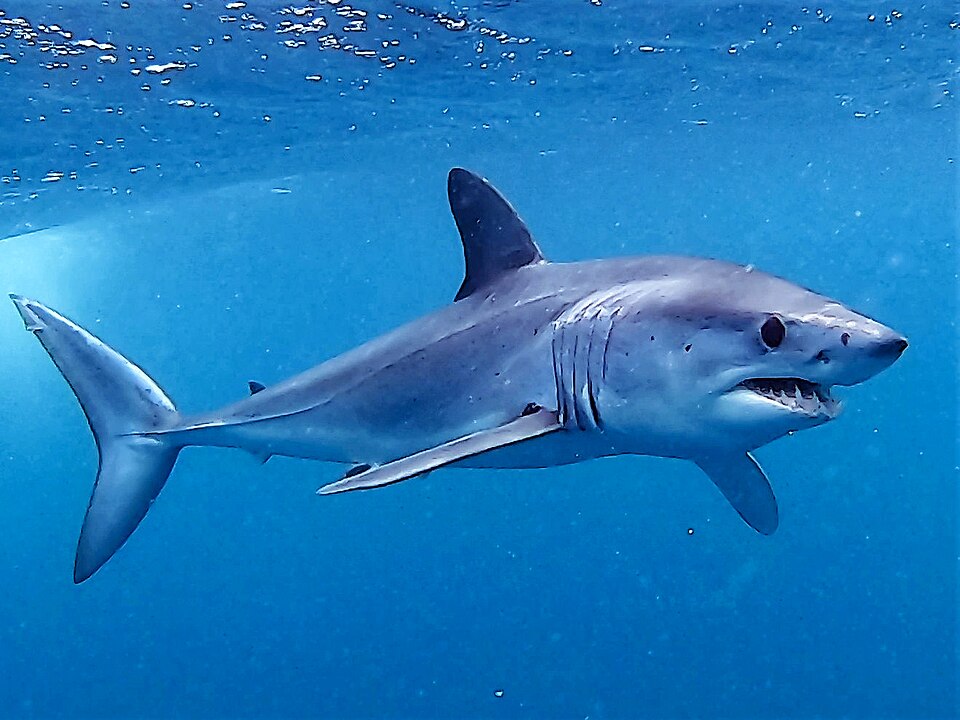
Shortfin Makos are streamlined, regionally endothermic predators that travel long distances through national and international waters.
See Shortfin Mako clearly
Select any thumbnail to open the unobstructed full-size image in a separate window.
Wildlife education and professional assessment
A fast pelagic lamnid shark is outside this library’s private aquarium recommendations. A wild diet or size record does not provide a captive system design.
Reviewed 2026-09-30. This is an applicability assessment, not a captive-care protocol.
Worldwide Distribution
Tropical, subtropical, and temperate waters of the Atlantic, Pacific, and Indian oceans.
Habitat and Movement
Open-ocean and offshore waters, commonly from the surface through deeper pelagic layers where temperature and prey are suitable.
Feeding and Ecological Role
It is a high-performance predator of fast fishes, squid, and other pelagic animals.
Biology and Life History
Shortfin Makos are live-bearing, mature late, and retain metabolic heat in selected tissues.
Global Threats and Conservation
Longline bycatch, targeted retention, international fishing pressure, and slow reproduction have driven serious global decline.
Aquarium suitability
A fast pelagic lamnid shark is outside this library’s private aquarium recommendations. A wild diet or size record does not provide a captive system design.
Shortfin Mako in Canada
Occurs seasonally in Canadian Atlantic offshore waters as part of a wider North Atlantic population.
- Canadian regions
- Atlantic Canada, Offshore Nova Scotia, Northwest Atlantic
- Canadian status
- Consult current Atlantic Canadian assessment and fisheries information
A living record
Canonical global profile supplied by the BlueCurrent Digital Ecosystem (BCDE). Public content last reviewed August 23, 2026.
- IUCN Red List of Threatened Species — Version 2026-1 ↗Conservation authority
- NOAA Fisheries — Shortfin Mako Shark ↗Government scientific agency