Achilles Tang (Acanthurus achilles) is a surge-zone surgeonfish of clear, oxygen-rich outer reefs, usually close to wave-washed rock and coral.
See Achilles Tang clearly
Select any thumbnail to open the unobstructed full-size image in a separate window.
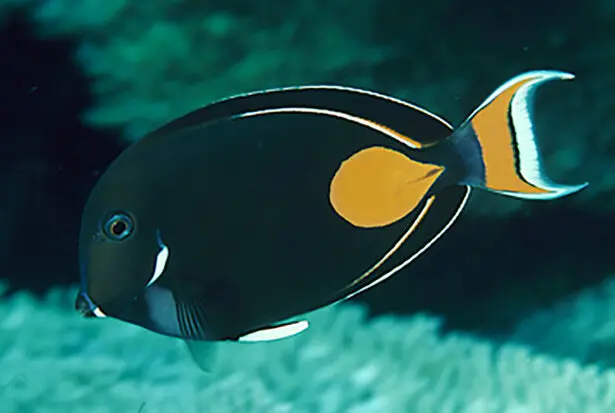
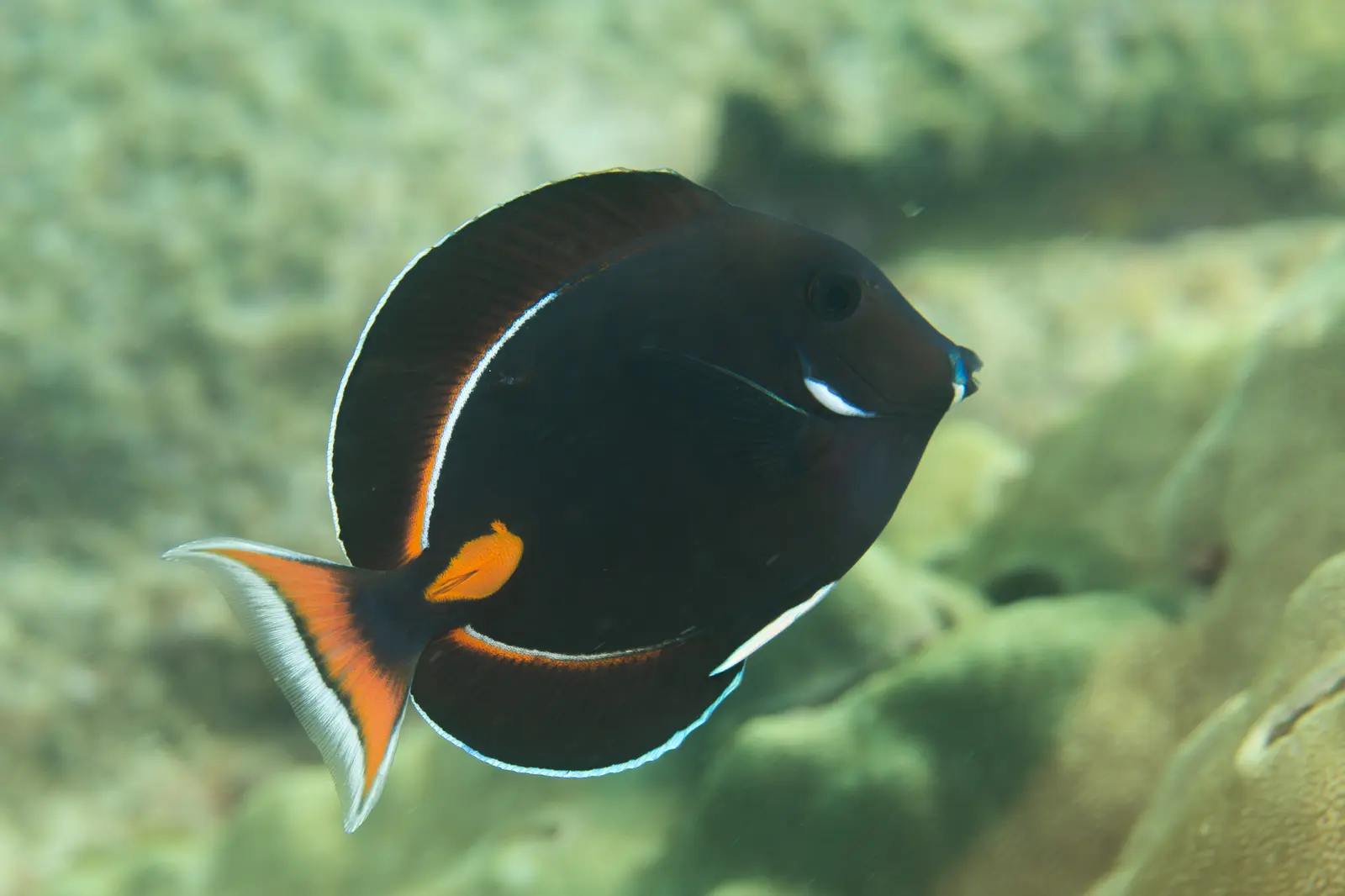
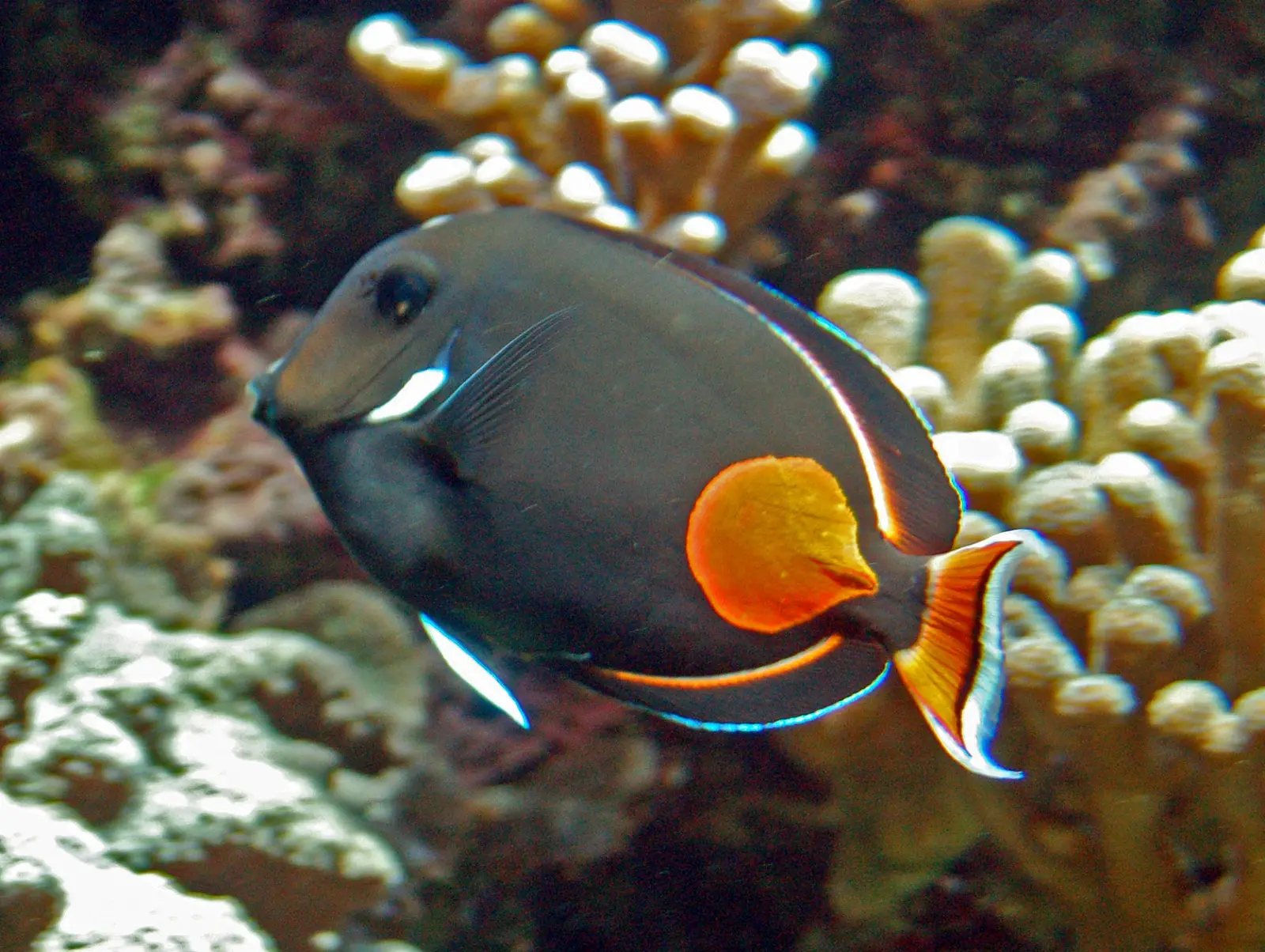
Responsible care profile
The minimum assumes substantial horizontal swimming length, powerful circulation and mature grazing habitat.
The structured record includes multiple references and at least one dedicated aquarium-care source.
2 referenced sources- Care level
- Advanced
- Minimum volume
- 179.6 US gal (680 L)
- Preferred volume
- 251 US gal (950 L)
- Adult size
- 9.8 in (25 cm)
- Reef compatibility
- Reef-Safe with Caution
- Temperament
- Semi-aggressive
- Social plan
- single specimen
- Minimum footprint
- 180 × 60 cm / 70.9 × 23.6 in with uninterrupted swimming length
Water
- Temperature
- 75.2–80.6 °F (24–27 °C)
- Salinity / specific gravity
- 1.023–1.026 SG
- pH
- 8.1–8.4
Habitat
long unobstructed swimming lanes; mature algae-bearing rockwork; high dissolved oxygen.
Large crevices for nighttime shelter.
Flow: Strong, turbulent flow with excellent gas exchange.
Secure lid required.
Feeding
herbivorous grazer · Provide marine algae throughout the day plus several small meals. · Food options: marine algae sheets, spirulina-rich pellets, small amounts of enriched marine foods · A mature grazing surface and constant access to vegetable matter are essential.
Compatibility
Keep one and introduce after less assertive tankmates.
Avoid or assess carefully: other Acanthurus tangs, cramped aquariums, low-flow systems.
What the evidence establishes
Field-level source review. Aquarium recommendations remain husbandry guidance, not experimentally validated limits.
Acclimation and quarantine
Quarantine carefully, maintain exceptional oxygenation and minimize handling and social stress.
Stocking safeguards
Aquarium setting: Home aquarium. Starvation risk: moderate.
After peaceful fishes and before any other assertive surgeonfish.
- No short or low-oxygen display
- No second Acanthurus without exceptional space
- No system without continuous marine algae and strong flow
Special risks
- Marine ich susceptibility
- Oxygen demand
- Territorial aggression
- Rapid loss of condition
Husbandry Findings and Limits
These findings explain what the cited evidence supports. Facility precautions are identified separately from tested captive outcomes.
Documented aquarium husbandry — Documented keeping guidance; not a controlled trial
Feeding: herbivorous grazer. Provide marine algae throughout the day plus several small meals. Food options: marine algae sheets, spirulina-rich pellets, small amounts of enriched marine foods. Large crevices for nighttime shelter. Water movement: Strong, turbulent flow with excellent gas exchange. Keep one and introduce after less assertive tankmates. Quarantine carefully, maintain exceptional oxygenation and minimize handling and social stress.
Scope and remaining limit: Species-matched author guidance is available; it is not a controlled lifetime trial.
Sources: LiveAquaria — Achilles Tang · TFH — Achilles TangHabitat and Distribution
A surge-zone surgeonfish of clear, oxygen-rich outer reefs, usually close to wave-washed rock and coral. Its documented range includes Central Pacific, Hawaiian Islands, Oceania.
Feeding and Ecological Role
Primarily grazes filamentous algae and contributes to keeping reef surfaces open for coral recruitment.
Conservation and Responsible Sourcing
Global conservation status requires current source verification; localized collection and reef degradation remain relevant pressures. Verify legal origin, collection method, and current trade requirements before acquisition.
Distribution & Habitat
Oceanic islands of the central and eastern Pacific. A reef-associated surgeonfish recorded in shallow, high-energy reef habitat.
Wild Natural History
Feeds on filamentous and small fleshy algae.
Identity
This record describes Acanthurus achilles Shaw, 1803 (WoRMS AphiaID 272957).
Aquarium Care
These statements describe the species in the wild. Aquarium-care guidance awaits separate evidence review.
A living record
MLL foundation profile reviewed against FishBase or the World Register of Marine Species; conservation language remains deliberately qualified where a current assessment has not been attached. Public content last reviewed September 14, 2026.
- FishBase — Acanthurus achilles ↗Scientific reference
- World Register of Marine Species ↗Taxonomic authority
- WoRMS exact taxon record ↗Reference source